
The appraisal industry is going through an important transformation with the introduction of the Uniform Appraisal Dataset (UAD) 3.6. Along with changes to appraisal reporting, the updated standard introduces a more structured way to communicate how a property’s interior and exterior were inspected.
For appraisers, mortgage lenders, and Appraisal Management Companies (AMCs), understanding these changes is essential to maintaining accurate reports and consistent appraisal workflows.
One area that deserves special attention is UAD 3.6 property inspection types. If you are an appraiser or work closely with appraisal operations, you may have questions about physical inspections, virtual inspections, and situations where no inspection is performed. You may also wonder how these inspection methods relate to traditional, hybrid, desktop, and exterior appraisal assignments.
Let’s break everything down so you can understand what each inspection method means, how it works, and why accurate reporting matters under UAD 3.6.
What Are UAD 3.6 Property Inspection Types?
UAD 3.6 property inspection types describe how an appraiser observes or gathers information about the interior and exterior of a property during an appraisal assignment.
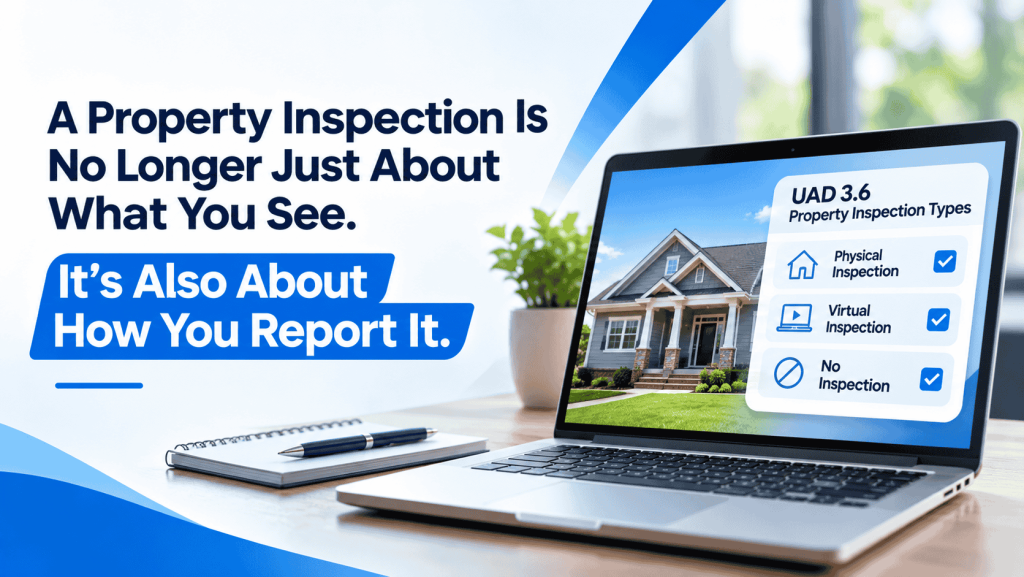
Under the redesigned Uniform Residential Appraisal Report (URAR), appraisers identify the inspection method used for both the interior and exterior of the subject property. The available inspection methods are:
- Physical Inspection
- Virtual Inspection
- No Inspection
The important thing to understand is that UAD 3.6 records the inspection method separately for the interior and exterior. This gives lenders and other intended users a clearer picture of what the appraiser personally inspected and what information was obtained through other methods.
For example, an appraiser may physically inspect the exterior of a property but not inspect the interior. In another assignment, the appraiser may use a virtual method for the interior while relying on other available information for the exterior.
This structured approach makes the scope of inspection easier to understand instead of relying only on general descriptions within the appraisal report.
1. Physical Inspection Under UAD 3.6
A physical inspection means the appraiser personally visits the property and visually observes the relevant areas.
This is the traditional approach most residential appraisers are familiar with. It allows the appraiser to see the property’s actual condition, features, layout, and characteristics rather than relying entirely on information collected by someone else.
Depending on the assignment, physical inspection may involve the property’s interior, exterior, or both.
What Does a Physical Property Inspection Involve?
During an interior inspection, the appraiser may observe:
- Living rooms, bedrooms, and other living spaces.
- Kitchen and bathroom conditions.
- Flooring, walls, ceilings, and interior finishes.
- Heating and cooling systems.
- Interior upgrades, renovations, and improvements.
- Visible damages, defects, and maintenance concerns.
During an exterior inspection, the appraiser may observe:
- Overall building appearance and condition.
- Exterior walls, roof, and visible foundation areas.
- Windows, doors, and other exterior features.
- Porches, patios, decks, and other amenities.
- Site characteristics and access.
- Visible exterior damages or maintenance issues.
The appraiser also gathers relevant property information, photographs, measurements, and other details needed to complete the assignment.
Why Does Physical Inspection Matter?
A physical inspection gives the appraiser a direct opportunity to observe the property. This can be particularly important when identifying differences between reported property characteristics and actual conditions.
For example, a property record may indicate that a home has three bedrooms and two bathrooms. During a physical inspection, the appraiser may discover that one room has been converted into a storage area or that the bathroom has undergone significant renovation.
These observations can affect how the property is described and analyzed.
Under UAD 3.6, a traditional appraisal requires the appraiser to personally perform an onsite inspection of both the interior and exterior. The appraiser should report the corresponding inspection method accurately.
2. Virtual Inspection Under UAD 3.6
Virtual inspection refers to observing property information through a virtual or remote method rather than personally visiting and physically inspecting the relevant area.
Technology has made it easier to collect property information remotely. Depending on the assignment and applicable requirements, virtual methods may involve video walkthroughs, live video communication, or other approved visual information gathering processes.
For example, an appraiser may review the interior of a property through a live video walkthrough facilitated by another person at the property.
The appraiser can observe different rooms, discuss property features, and review visible conditions without personally being physically present.
What Can a Virtual Inspection Help With?
A virtual inspection may provide information about:
- Interior room layouts and configurations.
- Visible property improvements.
- Kitchen and bathroom features.
- General interior condition.
- Visible damage or maintenance concerns.
- Certain property characteristics that can be observed remotely.
However, virtual observation has limitations. The appraiser may not be able to independently verify every physical characteristic or condition that would normally be visible during an onsite inspection.
For instance, a video walkthrough may show the living room, kitchen, and bedrooms, but it may not provide enough information to assess every detail of the property’s condition.
Does a Virtual Inspection Replace a Physical Inspection?
Not necessarily.
The inspection method must be appropriate for the assignment and meet the applicable lending and appraisal requirements. A virtual inspection should not automatically be treated as equivalent to a physical inspection.
The appraiser must understand the required scope of work, identify the information available, and accurately disclose how the property was observed.
This distinction is important because UAD 3.6 allows the inspection method to be reported separately for the interior and exterior.
3. No Inspection Under UAD 3.6
No Inspection means the appraiser did not personally inspect the applicable area of the subject property.
This does not mean that the appraiser completes the assignment without gathering property information. Instead, the appraiser may rely on available records, photographs, property data, third-party information, or other reliable sources, depending on the assignment.
For example, in a desktop appraisal, the appraiser may research the property using available information without personally visiting the property.
Similarly, an appraisal assignment may involve an exterior inspection while the appraiser does not personally inspect the interior.
When Might No Inspection Be Reported?
- The appraiser does not personally visit the property.
- The interior is not personally inspected.
- The assignment is completed using an approved desktop appraisal approach.
- Property information is obtained from other reliable sources.
- A third party property data collection is used for an eligible hybrid appraisal.
Does No Inspection Mean the Appraisal Is Incomplete?
No. An assignment can be completed without the appraiser personally inspecting every area, provided the selected appraisal method and scope of work meet the applicable requirements.
The appraiser still needs sufficient and reliable information to develop a credible opinion of value.
The key is transparency. The report should accurately communicate what the appraiser inspected and what information was obtained through other sources.
Understanding the Difference Between Inspection Methods and Appraisal Types
Here is where things can become confusing.
UAD 3.6 identifies three inspection methods: Physical, Virtual, and No Inspection. However, it also identifies different property valuation methods.
These are two related but separate concepts.
The inspection method explains how the interior and exterior were observed. The property valuation method explains the type of appraisal assignment being completed.
The four property valuation methods are:
Traditional Appraisal
A traditional appraisal requires the appraiser to personally visit the property and inspect both the interior and exterior.
For this type of assignment, the inspection method is Physical for both areas.
This approach provides direct observation of the subject property and allows the appraiser to collect relevant information during the onsite visit.
Hybrid Appraisal
A hybrid appraisal combines property data collection performed by a trained third party with the appraiser’s analysis and valuation.
For example, a qualified property data collector may visit the property, gather measurements, photographs, and property details, and provide the collected information to the appraiser.
The appraiser then reviews the available information, conducts the necessary research, analyzes comparable properties, and develops the opinion of value.
The appraiser does not have a personal inspection requirement under the hybrid appraisal method, although the scope of work and applicable requirements must still be satisfied.
Desktop Appraisal
A desktop appraisal is completed without the appraiser personally visiting the subject property.
The appraiser uses available and reliable property information, public records, photographs, market data, and other relevant sources to complete the assignment.
Since the appraiser does not personally inspect the property, the report must accurately reflect the inspection method used.
Exterior Appraisal
An exterior appraisal involves the appraiser personally inspecting the exterior of the subject property, generally from at least the street, without personally inspecting the interior.
The corresponding inspection methods are:
- Interior: No Inspection.
- Exterior: Physical.
It is important to understand that although UAD 3.6 provides for reporting an Exterior Appraisal, Fannie Mae’s current policy does not recognize it as a valid option for satisfying its lending requirements.
Therefore, appraisers and lenders should always verify the applicable agency and loan program requirements before accepting this assignment type.
Quick Comparison: UAD 3.6 Inspection Methods
Understanding the differences becomes easier when you compare them side by side.
| Inspection Method | What It Means | Example |
|---|---|---|
| Physical | Appraiser personally observes the area onsite. | Visiting and inspecting the home’s interior. |
| Virtual | Appraiser observes the area remotely. | Reviewing an approved virtual walkthrough. |
| No Inspection | Appraiser does not personally inspect the area. | Reviewing available property records. |
Remember that the inspection method can differ between the interior and exterior of the same property.
Why Are Property Inspection Types Important Under UAD 3.6?
You might wonder why UAD 3.6 places so much emphasis on identifying the inspection method.
The reason is simple: lenders need a clearer understanding of how an appraisal was completed.
An appraisal report is not just about the final property value. It also communicates the property’s characteristics, condition, features, and the appraiser’s analysis.
Knowing how the property was inspected helps the intended users understand the information supporting the appraisal.
1. Better Transparency in Appraisal Reporting
When the inspection method is clearly identified, lenders can better understand whether the appraiser physically inspected the property, used a virtual method, or did not personally inspect the relevant area.
This reduces confusion about the scope of work performed.
2. More Consistent Property Information
UAD 3.6 introduces a more structured reporting approach. Recording inspection methods separately for the interior and exterior helps create a clearer picture of how property information was obtained.
3. Improved Appraisal Review
AMCs and lenders can review the inspection disclosure alongside the rest of the appraisal report.
If the assignment requires a physical inspection but the report indicates no personal inspection, the reviewer can identify the difference and determine whether further clarification is needed.
4. Better Understanding of Appraisal Workflows
Different appraisal assignments involve different responsibilities and information sources.
Clearly identifying the inspection method helps appraisal operations teams understand the workflow followed by the appraiser and coordinate the necessary review and documentation.
Common Challenges Appraisers May Face With UAD 3.6 Inspection Reporting
Although the redesigned reporting structure provides more clarity, appraisers may still face challenges while adapting to the new requirements.
Some common areas to pay attention to include:
Selecting the correct inspection method: Appraisers must understand the difference between Physical, Virtual, and No Inspection and accurately report the method used for each area.
Understanding the assignment requirements: Not every appraisal assignment allows the same level of inspection. The appraiser must follow the applicable lender and agency requirements.
Managing third-party information: Hybrid assignments may involve information collected by another professional. Appraisers must carefully review that information and determine whether it is sufficient and reliable.
Maintaining proper documentation: Photographs, property details, measurements, and supporting information should be consistent with the assignment’s scope of work.
Adjusting to the redesigned URAR: Appraisers and appraisal operations teams need to become familiar with the new reporting structure, terminology, and data fields.
Addressing these areas early can make the transition smoother and reduce avoidable clarification requests and reporting errors.
How Can Appraisers Prepare for UAD 3.6 Property Inspection Requirements?
Getting comfortable with the new inspection reporting structure does not have to be complicated. A few practical steps can make a difference.
First, understand the three inspection methods and how they apply separately to the interior and exterior.
Next, become familiar with the four property valuation methods: Traditional, Hybrid, Desktop, and Exterior. Knowing the distinction between these concepts will help prevent incorrect reporting.
Appraisers should also review the redesigned URAR Reference Guide and official GSE documentation. These resources explain the reporting requirements and provide examples of how different assignment types should be documented.
It is equally important to check appraisal software updates. Your software provider should offer guidance on completing the new inspection-related fields and submitting reports in the required format.
Finally, review completed reports and pay attention to whether the inspection disclosure accurately reflects the work performed.
A little preparation can help avoid unnecessary revisions and improve communication between appraisers, AMCs, and lenders.
How GoSource Supports the Appraisal and Valuation Industry?
As appraisal reporting requirements continue to evolve, accuracy, documentation, and efficient workflows remain important for everyone involved in the valuation process.
For appraisers, maintaining accurate property information and completing reports can require significant time and attention. For AMCs and lenders, managing appraisal orders, coordinating documentation, and reviewing reports can create additional operational pressure.
GoSource understands the importance of keeping appraisal workflows organized and documentation moving efficiently.
Through its mortgage and valuation support services, GoSource works with businesses looking to improve operational efficiency, manage documentation workloads, and support smoother processes.
Whether your organization is adapting to UAD 3.6 reporting requirements or looking for ways to improve day-to-day appraisal operations, having a structured and reliable workflow can make a meaningful difference.
The objective is simple: maintain consistency, reduce avoidable delays, and allow appraisal professionals to focus on the work that requires their expertise.
Final Thoughts
Understanding UAD 3.6 property inspection types is an important part of adapting to the redesigned appraisal reporting process.
The distinction between Physical, Virtual, and No Inspection may seem like a small reporting change, but it provides valuable information about how a property was observed and how the appraisal assignment was completed.
For appraisers, the priority should be understanding the assignment requirements, selecting the correct inspection method, and maintaining accurate documentation. For AMCs and lenders, understanding these differences can support more consistent appraisal reviews and better coordination.
As the industry continues to move toward standardized, data driven reporting, staying informed about UAD 3.6 will help appraisal professionals maintain accuracy, consistency, and confidence in their work.
Looking to Improve Your Appraisal and Valuation Workflows?
Connect with GoSource to explore how our operational support services can help your business keep documentation and appraisal processes moving efficiently.
Frequently Asked Questions About UAD 3.6 Property Inspection Types
1. What is the difference between physical, virtual, and no inspection in UAD 3.6?
Physical Inspection means the appraiser personally visits and observes the property. Virtual Inspection involves observing the property remotely through an appropriate virtual method. No Inspection means the appraiser does not personally inspect the relevant area and uses other available property information, as permitted by the assignment requirements.
2. Does UAD 3.6 require appraisers to physically inspect every property?
No. UAD 3.6 supports different inspection methods depending on the appraisal assignment and applicable requirements. Certain eligible assignments, such as desktop and hybrid appraisals, can be completed without the appraiser personally visiting the property. However, appraisers must follow the required scope of work and accurately report the inspection method.
3. Can an appraiser use a virtual inspection for a UAD 3.6 appraisal?
A virtual inspection may be used when permitted by the applicable assignment requirements. It allows the appraiser to observe property information remotely through an appropriate virtual method, such as a video walkthrough. The appraiser must ensure that the inspection method meets the required scope of work and accurately reflects how the property was observed.
4. What does No Inspection mean for interior and exterior property reporting?
No Inspection means the appraiser did not personally inspect the relevant area of the property. For example, an appraiser may physically inspect the exterior but not personally inspect the interior. UAD 3.6 allows these inspection methods to be reported separately for each area.
5. What are the inspection requirements for a UAD 3.6 traditional appraisal?
A traditional appraisal requires the appraiser to personally visit and inspect both the interior and exterior of the subject property. Therefore, Physical Inspection is reported for both areas. The appraiser must document relevant property characteristics and observations as required by the assignment.
6. What is the difference between UAD 3.6 hybrid appraisal and desktop appraisal?
A hybrid appraisal involves property information collected by a third-party property data collector, which the appraiser reviews and analyzes to develop an opinion of value. A desktop appraisal is completed using available property records, photographs, and other reliable information without the appraiser personally visiting the property. Both methods must meet the applicable appraisal and reporting requirements.
7. How are property inspection methods reported separately under UAD 3.6?
UAD 3.6 requires appraisers to identify the inspection method used for the property’s interior and exterior independently. For example, an assignment may involve a Physical Inspection of the exterior and No Inspection of the interior. This reporting structure helps lenders understand which areas were personally observed by the appraiser.
8. How does UAD 3.6 property inspection reporting affect AMCs and mortgage lenders?
UAD 3.6 introduces more structured inspection reporting, making it important for AMCs and mortgage lenders to understand how property information is collected and documented. Accurate inspection details support better appraisal reviews, clearer communication with appraisers, and more consistent documentation throughout the valuation process.